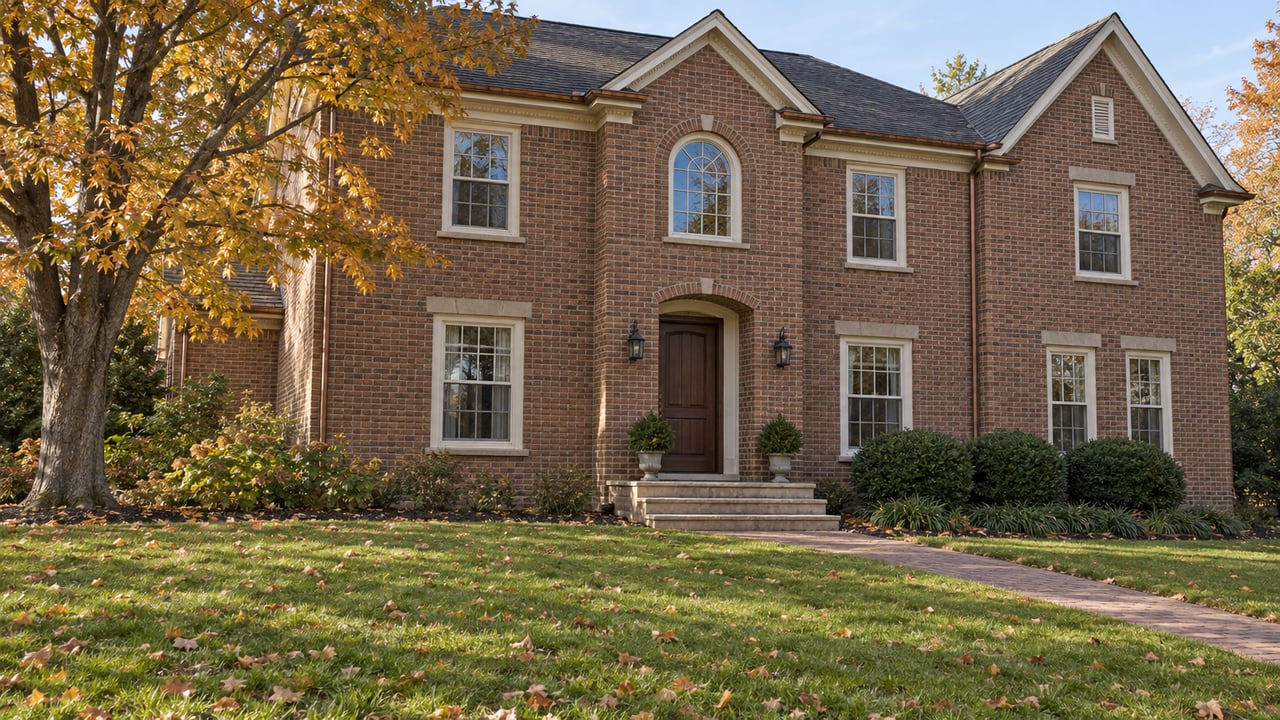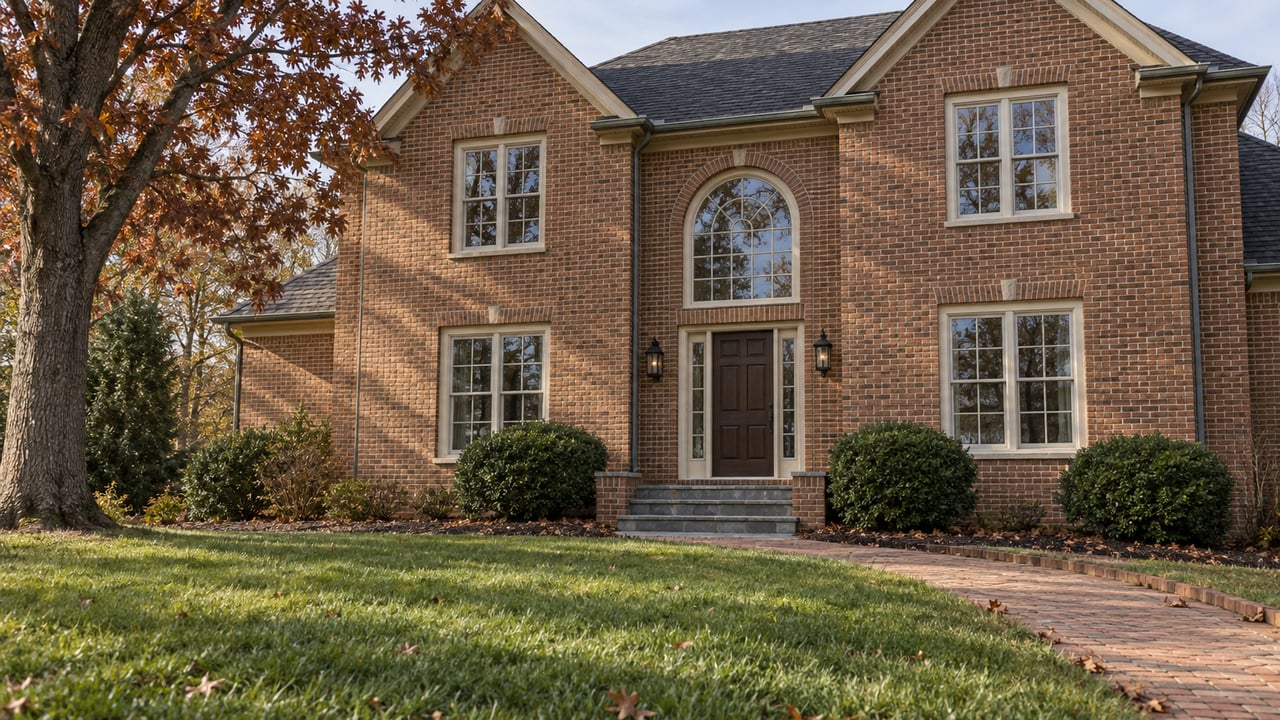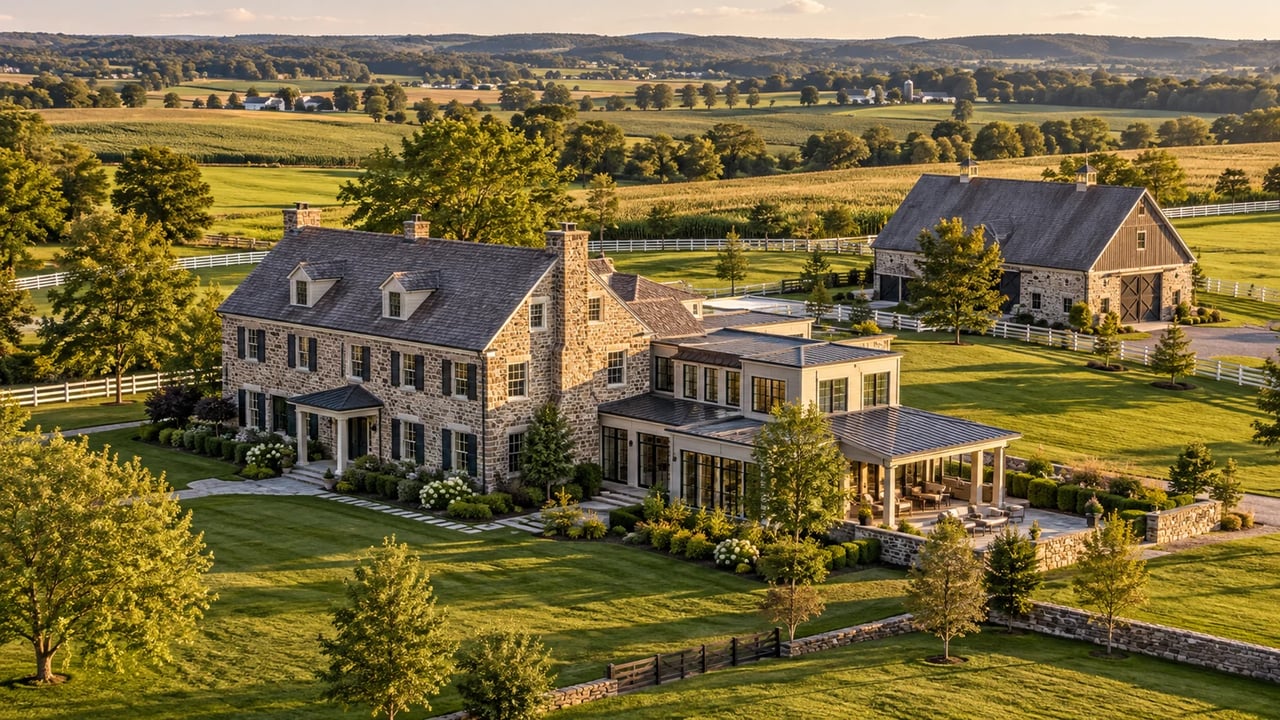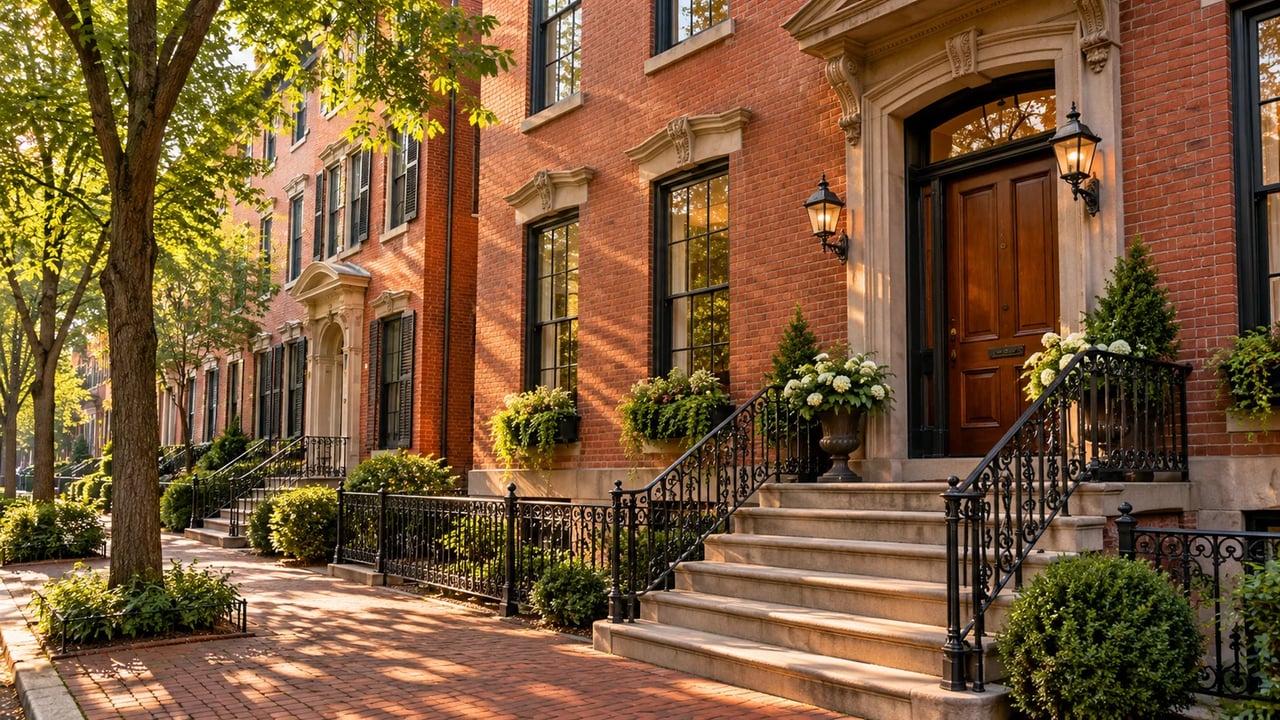
A seven-bedroom Georgian home dating to the late 1700s, with nearly 4,900 square feet and a private garage, sold for $910,000 on West King Street. The asking price had been $799,000.
Just a few blocks away, a former carriage house with slightly less interior space was being offered for $1.4 million. That property, at 236 North Concord Street, comes with nearly half an acre of gardens, a swimming pool, guest accommodations, and original features dating to its days as part of a nineteenth-century estate.
You could tour both in an afternoon and come away with two very different ideas of what you'd want from a historic home.
The market for historic homes in Lancaster, PA, includes beautifully maintained townhouses, substantial Georgian and Victorian residences, converted historic buildings, and properties that have undergone years of careful renovation.
If you're considering spending $750,000, $1 million, or more on one of these homes, the architecture is only part of the purchase. The condition of the building, quality of previous restoration work, private parking, and what you're permitted to change can all affect how much the property costs to own.
How Much Do Historic Homes Cost in Lancaster City?
Lancaster City historic homes range from modest brick rowhouses to large residences with extensive renovations and unusual private grounds.
Three properties illustrate how prices can differ within the city.
Property | Price | Living space | Property characteristics |
803 N. Duke Street | $522,000 sold | 2,839 sq. ft. | Early-1900s brick home, original woodwork, updated interiors |
323 W. King Street | $910,000 sold | 4,832 sq. ft. | Georgian residence, substantial renovations, private garden and garage |
236 N. Concord Street | $1,400,000 asking | 4,582 sq. ft. | Converted carriage house, approximately 0.49 acres, pool and guest house |
The North Duke and West King prices are completed for 2026 transactions. North Concord was advertised for $1.4 million in October 2026. These are individual Lancaster City properties, not a median price for the Historic District. Each address's preservation-district designation must be verified separately.
Notice the difference between West King and North Concord. The Georgian house offered more interior space and sold for under $1 million, while the carriage house was being marketed at a higher price with more extensive grounds and additional structures.
Property condition also varies considerably in this market. Two homes built a century apart may have similar modern plumbing and HVAC systems if both have been extensively renovated. Two neighboring houses from the same period can have entirely different repair histories.
For a look at available properties, explore Lancaster City Historic District real estate with Josh Wood.
Around $500,000: Historic Character at 803 North Duke Street
You don't need a seven-figure budget to find a substantial older home in Lancaster City.
At 803 North Duke Street, a brick semi-detached residence built around 1900 sold for $522,000. The four-bedroom house contained approximately 2,839 square feet, with high ceilings, original hardwood flooring, stained-glass details, and a traditional arrangement of living and dining spaces.
The kitchen and bathrooms had been updated, while period features remained visible throughout the interior.
The property sits on a compact city lot, with the type of private outdoor space typical of an established urban residence rather than a detached suburban property.
It was originally offered for $499,900 and sold above that price. The house subsequently returned to the market, making the $522,000 figure a historical sale rather than its latest advertised asking price.
For buyers considering older Lancaster homes around $500,000, North Duke illustrates what can be available: substantial living space, architectural details, and previous updates, alongside the maintenance responsibilities of an established masonry building.
The age of the house doesn't reveal when its roof was last replaced, whether the electrical service has been updated, or how previous masonry repairs were completed. Those details require a closer review of the property itself.
Around $1 Million: The Musser-Reigart House on West King Street
The Musser-Reigart House at 323 West King Street offers a more unusual example.
The original residence dates to the late eighteenth century, with later additions joining older portions of the building. Its Georgian architecture includes historic masonry, substantial room proportions, decorative woodwork, and architectural details associated with different periods of the home's history.
Inside are seven bedrooms and approximately 4,832 square feet.
The property also has a private garden and garage parking, features that can be particularly welcome on Lancaster City's older residential streets.
A Renovation That Went Beyond the Kitchen
Following a change in ownership in 2019, the property underwent significant work.
The subsequent sales listing described a remodeled kitchen and pantry, renovated bathrooms, a redesigned upper-level primary suite, upgraded electrical and plumbing systems, and replacement HVAC equipment.
The exterior work included stucco restoration, brick repointing, shutter restoration, and window improvements. Inside, radiant-heated bathroom floors added a modern feature without requiring the house to abandon its traditional architectural character.
Those improvements were part of the property that sold for $910,000, exceeding its $799,000 asking price by $111,000.
The home had previously sold for $332,500 in 2019, before the later renovation work. That earlier price belongs to a property in a different condition, and the renovation costs would need to be known before calculating any return on the owners' investment.
If you're looking at restored historic homes in Lancaster PA, a property like West King is worth examining room by room. The visible architectural details are appealing, but the plumbing, heating, structural changes, and exterior repairs represent a substantial part of the work completed.
Above $1 Million: The Carriage House on North Concord Street
A historic property doesn't need to be a conventional townhouse or detached mansion.
The residence at 236 North Concord Street began life as a carriage house for the Sener mansion on North Charlotte Street. Built in 1892, it still contains original stable doors, exposed beams, brick floors, and traces of its former horse stalls and hay drop.
Those features remain part of the living areas.
The home's later conversion introduced a custom kitchen with cherry cabinetry and soapstone counters, an open-beamed great room, and a first-floor primary suite with access to a private terrace.
The property's grounds are extensive by city standards. Behind the building are mature gardens, cobblestone paths, secluded patios, a swimming pool, and a separate guest house. Together, the main residence and guest accommodations provide four bedrooms and multiple bathrooms.
There is also an attached garage and additional secure off-street parking.
The entire property occupies approximately 0.49 acres in Chestnut Hill.
What Does the $1.4 Million Asking Price Include?
North Concord was advertised for $1.4 million in October 2026, with approximately 4,582 square feet of reported living area.
The outdoor space distinguishes it from many city residences. A private pool, guest accommodation, extensive gardens, and almost half an acre create maintenance and ownership considerations closer to those associated with a small private estate.
The property's architectural history is also unusual. Its conversion preserved elements of its original use rather than disguising the building as an ordinary modern house.
A prospective buyer would need to evaluate the condition of the main residence and guest house, the pool, exterior masonry, roof, mechanical systems, and landscaping.
The asking price remains an advertised figure until a completed transaction establishes what a buyer ultimately pays.
You can view the North Concord Street property through Josh Wood's home search, including its photographs and advertised features.
What Are You Paying for in a Restored Historic Home?
Two Lancaster houses can be similar in size while requiring very different amounts of work after purchase.
One may have original windows, old plaster, and a heating system nearing replacement. Another may preserve the same architectural character but have recently upgraded plumbing, electrical wiring, roofing, and mechanical equipment.
The asking prices may reflect those improvements, although the amount an owner spent renovating doesn't establish their contribution to resale value.
Restoration Versus Cosmetic Renovation
A renovated house might have a new kitchen, contemporary bathrooms, updated lighting, and freshly finished floors.
A restoration-oriented project can involve repairing or preserving historic architectural materials, sometimes alongside substantial modern renovations.
For example, repairing original wood sash windows is different from replacing them with standard contemporary units. Restoring masonry with compatible mortar requires different materials and methods from an ordinary cosmetic brick repair.
The work can also be much less visible. Rebuilding a deteriorated chimney, correcting basement drainage, or upgrading electrical systems may involve considerable expense without changing the property's appearance in listing photographs.
Josh Wood's article on architectural styles in Lancaster City's Historic District provides more detail on the building features associated with Lancaster's Georgian, Federal, Victorian, and later architectural periods.
What Does a High-Quality Restoration Look Like?
Take masonry as an example.
An older brick wall can look freshly repaired while containing mortar that's too hard for the historic brick. Incompatible mortar can cause deterioration as moisture and the materials respond differently to weather.
The National Park Service's guidance on historic masonry problems describes the importance of matching mortar characteristics and using appropriate repair methods.
Historic windows present similar considerations. Well-maintained original windows may be suitable for repair, while deteriorated or poorly altered units might require more extensive work.
A thorough inspection should look beyond whether the room has been freshly decorated.
Original Features and Modern Systems
A historic house can comfortably accommodate modern heating, cooling, kitchens, bathrooms, and home technology.
The practical issue is how those improvements were incorporated.
A heating system installed around unusual historic room layouts may need specialist attention to ducts, insulation, controls, or equipment placement. New electrical work should be evaluated for capacity, permits, and remaining older wiring.
The work described in the West King Street listing included both architectural restoration and modern system improvements. North Concord's marketing materials also identify updated electrical, plumbing, heating, and cooling equipment.
For buyers, knowing when and how those upgrades were completed is more useful than relying on a listing's description of the house as fully renovated.
Historic Architecture Is Not the Same as Historic-District Designation
One common source of confusion in Lancaster City is the difference between owning an old house and owning a house within a particular preservation district.
Lancaster has two local districts with different review requirements.
The Lancaster Historic District and HARB
The local Lancaster Historic District was established in 1967 and is overseen by the Historical Architectural Review Board, commonly known as HARB.
Under the City of Lancaster's HARB rules, qualifying changes to exterior design or materials are subject to review.
For example, replacing original wood windows with vinyl, altering a historic porch, changing the front entrance, or adding a dormer may require approval.
HARB doesn't review interior renovations or exterior paint colors.
Certain repairs and identical in-kind replacements may receive administrative approval rather than a formal board review. The City nevertheless requires permits for qualifying work within the district.
Where formal review is necessary, HARB makes a recommendation and the City Council issues the Certificate of Appropriateness.
The Heritage Conservation District
The City's Heritage Conservation District has a narrower review process.
It generally focuses on qualifying demolition, new construction, and additions affecting the streetscape.
The Historical Commission doesn't review ordinary maintenance or alterations such as window and door replacements, roofing, siding, fences, and masonry repairs under the same process.
Building permits, zoning restrictions, and other construction requirements may still apply.
A house can have considerable historical significance without being located inside the smaller HARB district. The City's official preservation maps and Historic Preservation Specialist can establish which requirements apply to an individual address.
Josh Wood's guide to owning a Lancaster Historic District home covers the approval process and common exterior maintenance considerations in greater detail.
What Should You Inspect Before Buying a Historic Luxury Home?
Imagine touring a beautifully renovated house where nearly every room looks finished. The kitchen is modern, the floors have been restored, and the bathrooms appear new.
But upstairs, one window doesn't open properly. In the basement, you notice fresh paint near an older stone foundation. The seller has mentioned previous chimney repairs, but you haven't seen the documentation.
Those details deserve attention before deciding what to offer.
A general home inspection remains important, but specialist evaluations may be appropriate for older masonry, roofing, structural alterations, chimneys, or historic windows.
Six Areas Worth Examining
- Roof, flashing, and chimneys: Check the condition, repair history, drainage, and materials, particularly where slate, older masonry, or complex rooflines are involved.
- Masonry and exterior walls: Look for deteriorating mortar joints, inappropriate previous repairs, cracking, and evidence of water penetration.
- Windows and exterior woodwork: Examine original sash, glazing, deterioration, storm windows, and the condition of past repairs.
- Electrical and plumbing systems: Establish which components were replaced, whether older wiring remains, and whether significant work was permitted.
- Heating and cooling: Review equipment age, distribution, service records, and how the systems accommodate the building's layout.
- Basement moisture and structural alterations: Investigate drainage, water staining, foundation conditions, and changes to walls or floor structures.
Some findings may need straightforward maintenance. Others could require specialist repairs or further investigation before the buyer can establish the likely cost.
The Renovation Records Worth Requesting
For a substantially restored home, available documentation can provide a useful history of the property.
Ask for:
- Building permits and completion records for major renovations
- HARB or Historical Commission approvals, where applicable
- Contractor invoices for significant restoration and structural work
- Roof, masonry, chimney, and window repair records
- Electrical, plumbing, and HVAC installation information
- Available warranties, drawings, and records of additions
A property that's changed ownership several times may have gaps in its documentation. Specialist inspections become particularly valuable when records don't show significant work.
If you're considering a renovated Lancaster residence, Josh Wood can help review comparable sales and construction details, while qualified inspectors and contractors assess its physical condition.
How Expensive Is It to Maintain a Historic Lancaster Home?
A house with updated systems and a well-documented restoration history may need less immediate work than a less expensive property with substantial deferred maintenance.
The costs depend on the individual building.
A slate roof may need specialist repairs. Original wood windows can require maintenance of glazing, paint, and joinery. Brick repointing may involve labor-intensive work and carefully selected mortar. Older basements may require investigation of water intrusion and drainage before finishes are repaired.
The home's size also affects expenses.
A 4,800-square-foot residence has extensive interior and exterior surfaces to maintain. A converted carriage house with a guest residence, swimming pool, and landscaped grounds introduces additional structures and equipment.
Buyers should also review insurance coverage and the costs of insuring unusual construction or significant architectural features.
What About Property Taxes?
Lancaster County's 2027 reassessment is particularly relevant to buyers purchasing in late 2026.
The county's official reassessment guidance explains that the previous year's millage rates cannot simply be applied to the new assessed values to calculate future tax bills. Millage rates are being adjusted for the reassessment.
Some historic properties may also have tax-abatement arrangements associated with qualifying improvements.
For example, the West King Street listing described a LERTA tax-abatement benefit. A prospective buyer would need to verify the remaining term, applicability, and tax treatment for that property.
Josh's article on Lancaster City's 2027 property-tax reassessment provides a more detailed discussion of how changes in assessed values and millage affect property owners.
How Does Historic Lancaster Luxury Compare With a Newer Home?
Around $1 million, a buyer could consider a restored Lancaster City residence, a newer custom home in Manheim Township, or a substantial property in the wider Lititz area.
A city house might offer original architecture, a private courtyard, and proximity to downtown restaurants and cultural venues.
A suburban home may have a newer floor plan, additional garage space, or a larger conventional residential lot.
The construction history differs as well. A historic home may have undergone several stages of alteration, while newer construction generally has a shorter and more readily documented building history.
Josh's guide to what $1 million buys across Lancaster County compares those alternatives through local property examples.
For buyers considering a higher budget, his article on what $2 million buys in Lancaster County explores larger estates and substantial custom residences.
The decision often becomes quite concrete once you've toured a few properties. You may prefer a restored historic staircase and rooms with tall windows, or a newer home with a larger garage and less immediate renovation planning.
Buying Historic Lancaster City Real Estate With Josh Wood
Historic luxury homes in Lancaster PA can be difficult to compare with one another.
The differences include architecture, condition, renovation quality, parking, outdoor space, and the extent of work completed over many years.
Josh Wood has worked with high-end Lancaster buyers and sellers for more than 19 years, handling hundreds of millions of dollars in real estate transactions. His background also includes approximately two decades of new-home construction experience.
That experience is relevant when reviewing substantial renovations, additions, building systems, and construction quality.
Josh can help buyers examine relevant completed sales, narrow their property search, and coordinate showings while independent inspectors and qualified contractors evaluate specialist issues.
For buyers exploring restored historic homes, the conversation can begin with the type of architecture you're interested in, your preferred streets or neighborhoods, and how much renovation or future maintenance you're willing to undertake.
Browse historic homes for sale in Lancaster PA, or contact Josh Wood to discuss a particular property and arrange a showing.
Selling a Restored Historic Home in Lancaster City
If you've invested in a major restoration, the listing needs to communicate more than how many bedrooms the property has.
A buyer may want to know which features are original, what has been repaired, when the mechanical systems were updated, and whether exterior alterations received the appropriate approvals.
Good architectural photography can show original craftsmanship, room proportions, fireplaces, staircases, and restored masonry.
But the property information also needs to address the work that photographs can't show: electrical upgrades, roofing, drainage, structural repairs, heating and cooling, and other substantial improvements.
Josh's guide to luxury home marketing standards in Lancaster County examines professional photography, floor plans, video, and the presentation of distinctive properties.
Pricing and Reviewing Offers
The West King Street property illustrates a completed transaction where the buyer paid above the advertised price. Its substantial renovation history was part of what prospective purchasers could evaluate.
For another historic residence, recent comparable transactions may be limited, particularly if the house has unusual architecture or extensive private grounds.
A listing strategy can account for the property's condition, documented improvements, parking, location, and the available competition.
Once offers arrive, inspection contingencies, financing, credits, and closing arrangements can influence the final result.
Josh's article on comparing offers for a Lancaster historic home examines the contractual considerations that accompany selling an older property.
If you're preparing to sell a substantial restored residence, discuss its pricing and marketing with Josh Wood. His construction background and Lancaster sales experience can help inform the property's presentation and comparable-sale analysis.
Finding a Historic Lancaster Home You'll Want to Own
The historic housing market in Lancaster City offers several kinds of luxury.
You might be drawn to a Georgian residence with extensive interior space and carefully preserved details, a converted carriage house with private gardens, or an established brick townhouse with original character and modern improvements.
You can explore Lancaster City historic home listings or speak with Josh Wood about the properties and neighborhoods you're considering.
After touring a historic home, your phone might hold two very different photographs: the beautiful staircase you couldn't stop looking at and a faint stain beneath an upstairs window. You already know which picture you'd rather show your friends. Before arranging a second visit, though, you might want to see the window-repair records and find out what any future replacement would involve.
Frequently Asked Questions
How much does a historic home cost in Lancaster City?
Historic Lancaster City homes span a broad price range. Recent examples include the $522,000 sale at 803 North Duke Street and the $910,000 sale at 323 West King Street, while an unusual carriage-house estate on North Concord was advertised for $1.4 million.
What does $1 million buy in Lancaster City's historic neighborhoods?
A budget around $1 million can provide access to a substantial restored residence with original architectural features, modernized systems, and private outdoor space. The seven-bedroom Musser-Reigart House at 323 West King Street sold for $910,000 with approximately 4,832 square feet.
Are there million-dollar historic homes in Lancaster City?
Yes. The former carriage house at 236 North Concord Street was advertised for $1.4 million in October 2026, with gardens, a swimming pool, guest accommodation, and approximately half an acre of grounds.
What is the price range for restored historic homes in Lancaster, PA?
Prices depend on location, architectural character, size, parking, condition, and renovation quality. Individual documented examples range from approximately $500,000 to well above $1 million, although the small sample here doesn't establish a citywide luxury median.
Can you renovate a home in the Lancaster Historic District?
Yes, but qualifying exterior alterations within the HARB Historic District may require review and approval. Interior renovations aren't reviewed by HARB, although building permits and other requirements can still apply.
Is the Heritage Conservation District the same as the HARB Historic District?
No. Lancaster's HARB district regulates more types of exterior alterations, while the Heritage Conservation District primarily reviews qualifying demolition, new construction, and additions affecting the streetscape.
Are historic homes in Lancaster City expensive to maintain?
Maintenance costs depend on the building's condition and renovation history. Historic masonry, roofing, windows, mechanical systems, moisture control, and other components may require specialist inspections or repairs.
What should I inspect before buying a historic Lancaster home?
Examine the roof, chimneys, masonry, windows, electrical and plumbing systems, foundation, and signs of moisture. Request renovation permits and repair records, and consider specialist inspections for unusual construction or significant historic features.
Does a historic designation increase property value?
Historic designation doesn't guarantee a higher price. Architectural quality, restoration condition, location, parking, outdoor space, and comparable completed sales all contribute to how a property is valued.
Is off-street parking valuable for a Lancaster City luxury home?
Private garages and dedicated parking spaces can be attractive features in established urban neighborhoods. Their contribution to value varies with the property's location and the availability of similar homes with private parking.
Where can I find historic luxury homes for sale in Lancaster City?
Josh Wood's Lancaster City Historic District listings provide access to available properties. You can also contact Josh Wood to discuss a particular home, restoration considerations, and recent comparable sales.