In September 2025, 121 Eshelman Road sold for $2 million.
The house measured 4,925 square feet. That alone makes it a useful example because it challenges the assumption that a $2 million Lancaster property is simply an enormous version of a $1 million house.
The rest of the property tells the more interesting story. It sat on 3.5 acres along the Conestoga River in Neffsville, with extensive renovations, a custom wine cellar, smart-home upgrades, a pool, and a newer pool house with an outdoor kitchen.
At this level of the Lancaster market, the extra money often goes into things that are difficult to reproduce: a particular site, mature acreage, water frontage, completed outdoor environments, architectural quality, privacy, or years of thoughtful improvements.
That is the more useful way to understand 2 million dollar homes.
Josh Wood has worked with high-end Lancaster buyers and sellers for more than 19 years and has handled hundreds of millions of dollars in luxury and high-end real estate transactions. His experience becomes especially relevant when a buyer is comparing properties whose value can’t be explained by bedrooms, bathrooms, and square footage alone.
What Does $2 Million Buy in Lancaster PA?
At roughly $2 million, buyers can encounter properties where several expensive attributes converge at once.
The house might have undergone a major renovation, but the site may be equally important. Acreage close to Lancaster, mature privacy, river frontage, extensive outdoor living, custom structures, or historically significant architecture can all shift value considerably.
That means two homes offered at the same price may share very little beyond the asking number.
One may be a close-in estate with only a few acres but an unusually scarce setting. Another might sit farther from Lancaster and devote much more of the budget to land. A city property could put more of its value into architecture, scale, restoration quality, and location.
Some of the things a buyer may encounter around this level include:
A harder-to-replace site. Water, views, privacy, mature landscape, or a close-in acreage setting can carry substantial value.
Completed capital improvements. Pools, pool houses, outdoor kitchens, major additions, hardscape, and professional landscaping may represent years of work.
Higher construction complexity. Custom millwork, masonry, specialized mechanical systems, and extensive renovations can add cost without necessarily making the house larger.
More land responsibility. Acreage may come with wells, septic systems, easements, barns, drainage, or agricultural restrictions.
Greater individuality. The higher the price, the less useful it becomes to assume that another home of similar size is a true substitute.
This is why $2 million dollar homes shouldn’t be judged with a simple dollars-per-square-foot shortcut.
121 Eshelman Road Shows Why Scarcity Can Matter More Than Size
The Eshelman Road sale makes the point better than a generic luxury checklist.
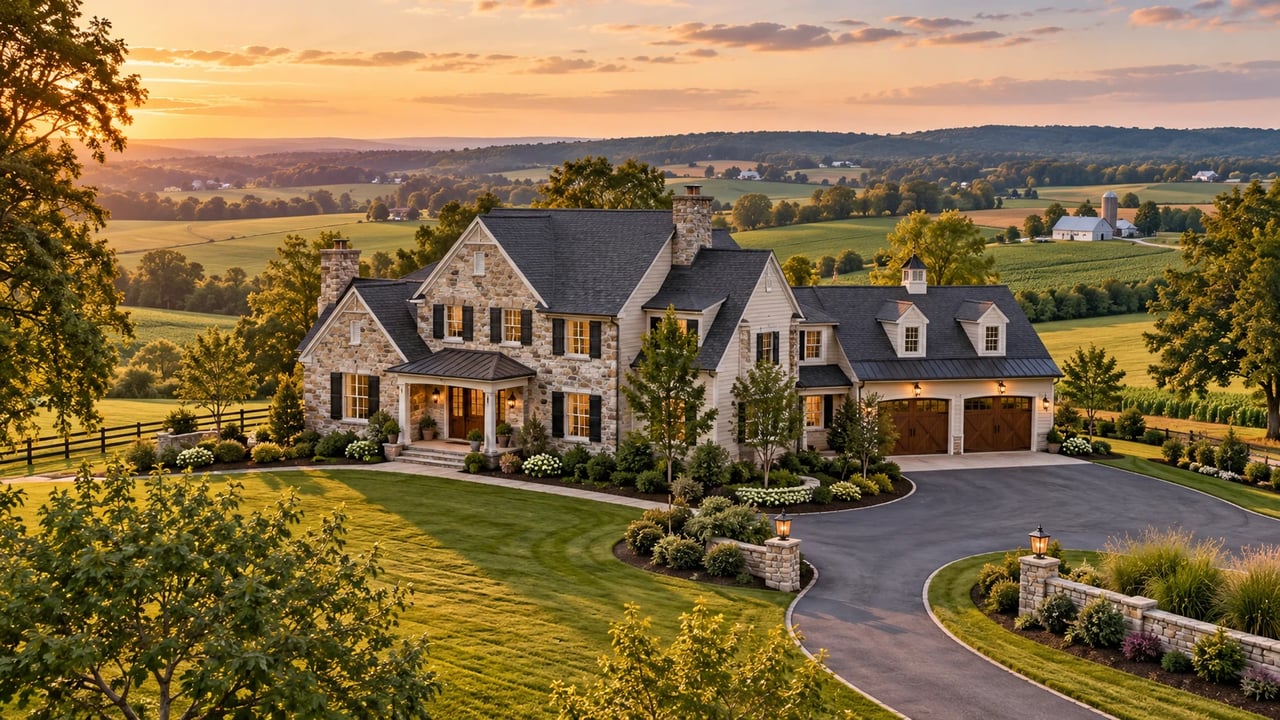
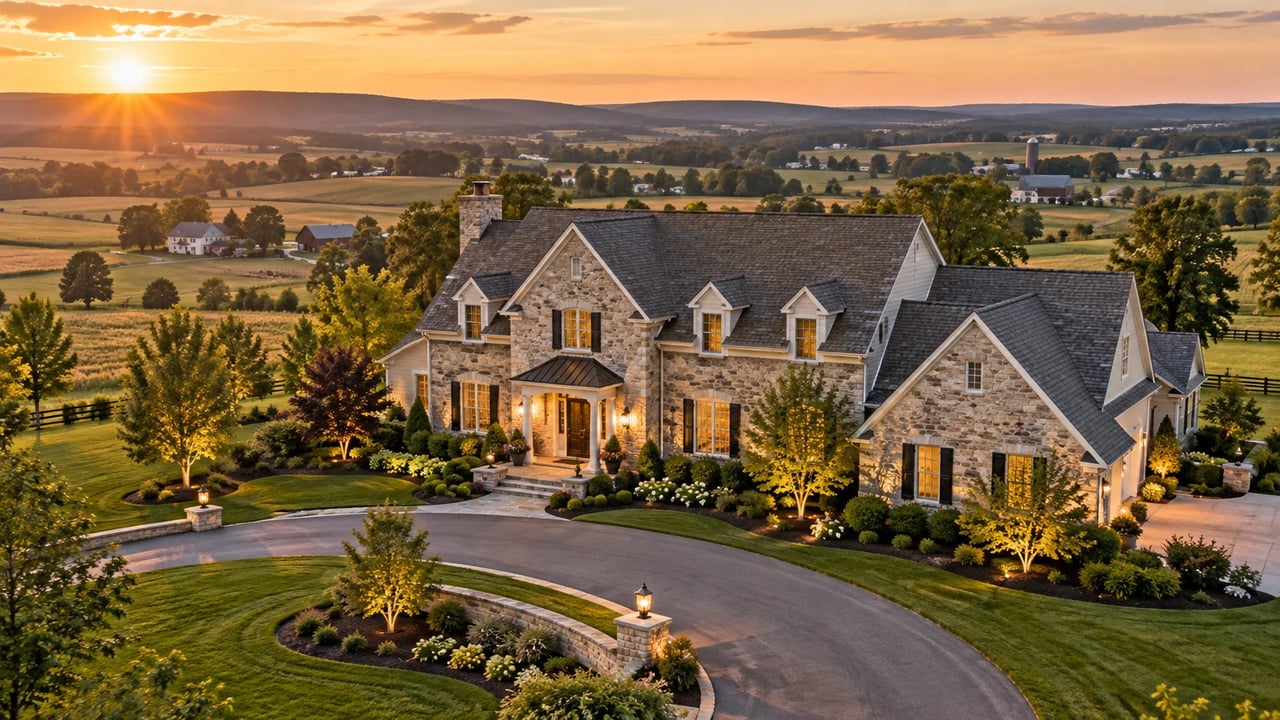
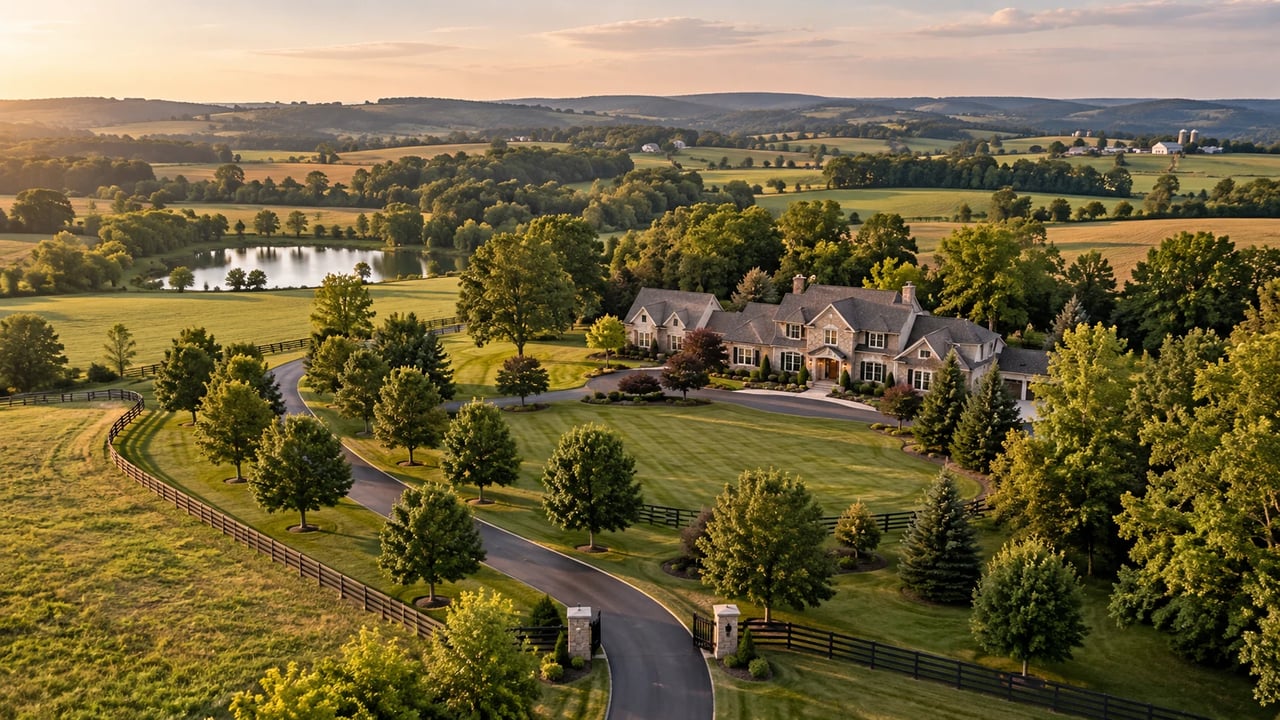
The property sold for $2 million, measured 4,925 square feet, and occupied 3.5 acres in Neffsville. Its site ran along the Conestoga River, and the home included extensive renovations, a wine cellar, smart-home features, a pool, and an outdoor entertaining environment built around a pool house and outdoor kitchen.
Its annual real estate tax shown on the property record was $22,701, another reminder that the purchase price is only one part of owning a high-end property.
The lesson is not that every $2 million home should look like Eshelman Road.
It’s almost the opposite.
Properties at this level are often expensive because of a particular combination that is difficult to find again.
Another buyer may place the premium on historic architecture. Someone else might prefer ten or twenty acres and simpler interiors. A newer custom home may put more money into construction quality and systems than into land.
The value becomes more individual as the properties become less interchangeable.
Where Does the Extra $1 Million Go?
The difference between a $1 million home and a $2 million home in Lancaster isn’t necessarily another 3,000 square feet.
Sometimes it’s the land under the house. Sometimes it’s everything already completed around it.
The site can carry enormous value
A house can be renovated.
The lot cannot be moved.
Close-in acreage, river frontage, wooded privacy, mature landscaping, and protected surroundings all fall into the category of things a buyer can’t simply add after closing.
Construction quality is more than visible finishes
At this level, it makes sense to look past countertops and appliance brands.
Windows, roofing, drainage, insulation, HVAC design, electrical capacity, structural additions, masonry, cabinetry, and the quality of previous renovations can matter much more over the life of the house.
Finished outdoor environments cost real money
A pool alone is one line on a listing.
A completed setting with a pool house, covered dining area, outdoor kitchen, hardscape, grading, lighting, landscaping, and utilities is a different proposition.
The buyer is purchasing not only the materials, but also the time, coordination, approvals, and construction already behind them.
Scarcity changes the comparison
A feature becomes especially valuable when it’s difficult to reproduce.
That is why river frontage, certain historic properties, mature acreage near Lancaster, and distinctive architecture can make straightforward price-per-square-foot comparisons feel incomplete.
Where Do High-End Lancaster Properties Show Up?
Luxury homes Lancaster PA covers several very different markets.
A buyer who wants privacy without feeling remote will evaluate Lancaster County differently from someone who wants twenty acres, a barn, or city architecture.
Manheim Township and Neffsville: Close-In Land Is Part of the Appeal
Manheim Township is a strong example of why location and land should be evaluated together.
121 Eshelman Road offered 3.5 acres in Neffsville while remaining close to Lancaster and Lancaster Country Club. The combination of acreage, river frontage, established surroundings, and proximity is much harder to reproduce than square footage alone.
Buyers can explore Manheim Township and Neffsville separately because even within the township, individual pockets can feel quite different.
It’s also worth remembering that Manheim Township and Manheim Borough are separate places. Treating them as interchangeable can lead to confusion around neighborhoods, schools, taxes, and the type of housing available.
Lititz and Warwick: A Town-and-Country Mix
Around Lititz, high-end buyers can move between a small-town setting and countryside outside the borough.
That creates a wider set of trade-offs.
A property closer to town may place more value on location and accessibility. Move outward and land can become more prominent, with custom homes, larger lots, or properties that begin to feel more like estates.
Luxury custom homes Lancaster PA and luxury new homes Lancaster PA can both appear in this part of the market, but buyers should still evaluate the lot, municipality, systems, and final construction quality rather than treating “new” as an automatic proxy for better.
Lancaster City: Mansions Mean Something Different Here
Mansions in Lancaster, PA, don’t need acreage to justify their position.
In the Lancaster City Historic District, value can concentrate in architecture, scale, restoration quality, original details, location, and walkability.
A large historic city residence may sit on a fraction of the land available elsewhere in the county.
That doesn’t make it a lesser property. It means the money is being spent differently.
Parking, garages, restoration history, exterior maintenance, and the quality of prior renovations also become more important because older urban homes come with a different ownership profile from newer estates.
Rural Lancaster County: Land Can Become the Main Asset
The category of homes with acreage for sale Lancaster County PA can include anything from a modestly sized house on substantial land to a highly improved equestrian or farmette property.
Once the land becomes a major part of the value, buyers need to think beyond the house.
Barns, workshops, fencing, wells, septic systems, access roads, easements, agricultural use, topography, and drainage can all influence what the property is worth and what it will cost to own.
That leads to a very different kind of due diligence.
Acreage Changes the Deal Before It Changes the Lifestyle
Large acreage photographs beautifully.
It also creates more to investigate.
A buyer looking at several acres should understand the land as carefully as the residence.
Before making an offer, useful questions can include:
Where are the boundaries? A current survey can clarify what is actually being purchased and where improvements sit.
How is access handled? Shared lanes, private roads, rights of way, and recorded access agreements can matter.
What does zoning permit? Future barns, additions, business activity, animals, or subdivision plans should never be assumed.
Are there easements? Conservation, utility, access, agricultural, or other easements can materially affect use.
Is the property in Clean and Green? Enrollment can affect tax assessment and future land-use decisions.
How are water and sewage handled? Well and septic systems deserve their own records and inspections where applicable.
What condition are the outbuildings in? A large barn or detached structure can be an asset and a significant maintenance obligation.
How does water move across the site? Slopes, streams, retaining walls, drainage, and stormwater deserve attention on larger properties.
None of these issues make acreage undesirable.
They’re simply part of understanding what is being purchased.
Clean and Green Does Not Mean the Land Cannot Be Sold
Pennsylvania’s Clean and Green program provides preferential property-tax assessment for qualifying agricultural, agricultural-reserve, and forest-reserve land.
A sale by itself does not automatically mean that seven years of rollback tax becomes due.
Pennsylvania explains that when a landowner breaches the covenant, the penalty can include seven years of rollback taxes plus 6% simple interest per year. The state also provides rules for certain split-offs and separations that may be handled differently.
For a buyer, the useful question is not merely, “Is this property enrolled?”
It’s what the enrollment means for the buyer’s intended use.
Someone who wants to maintain qualifying acreage may approach the program very differently from a buyer planning substantial development or a change in land use.
Preserved Farmland Is More Than a Beautiful View
Lancaster County has preserved farmland at a scale that materially shapes the local landscape.
As of December 31, 2025, the Lancaster County Agricultural Preserve Board reported 90,867 preserved acres across 1,109 family farms.
For high-end buyers, that matters in two ways.
First, preserved farmland can contribute to the open landscape surrounding a residence. Second, a preserved property itself may come with permanent restrictions.
Lancaster Farmland Trust explains that a conservation easement removes development rights while the owner retains the property. Its easements remain attached to the title and transfer from owner to owner.
That makes an easement a property-right issue, not merely a scenic benefit.
A buyer should understand what can be built, what uses remain permitted, and what rights have already been restricted before assuming that a large parcel offers unlimited future flexibility.
Custom Does Not Mean the Same Thing in Every $2 Million Home
A long feature list can make almost any property sound luxurious.
At $2 million, buyers should go deeper.
The questions worth asking include how the property was built, how major renovations were integrated, and how the systems will age.
Structure and envelope
Look at roofing, windows, foundations, additions, drainage, masonry, insulation, and how newer work connects with the original structure.
Mechanical systems
A large residence may have several HVAC zones, generators, radiant systems, geothermal equipment, sophisticated water treatment, or expanded electrical service.
Those systems can improve comfort and capability, but they also require maintenance.
Craftsmanship
Custom cabinetry, millwork, stonework, staircases, floors, built-ins, and exterior masonry can reveal much more about construction quality than a recognizable appliance brand.
Renovation cohesion
A major renovation should make sense as a whole.
Does the addition flow naturally into the original home? Were utilities and systems upgraded with the new space? Do material choices feel coordinated?
Josh Wood’s background includes substantial new-home construction experience alongside more than 19 years in high-end Lancaster real estate, which is useful context when evaluating additions, renovations, and luxury custom homes Lancaster PA.
A $2 Million House Can Be Expensive to Own in Ways the Mortgage Does Not Show
The monthly loan payment is only one part of the ownership budget.
A large property can bring recurring costs that don’t show up in the sale price:
property taxes
homeowners insurance
landscape maintenance
tree work
pool servicing
private-road maintenance
snow removal
generator servicing
well and septic maintenance
barns and other outbuildings
security systems
utilities across large conditioned spaces
The exact cost depends far too much on the individual property to publish one credible Lancaster-wide annual estimate.
A five-acre property with a pool and several detached structures may have a completely different cost profile from a historic city residence sold for the same amount.
What Is the Mortgage on a 2 Million Dollar Home?
Take a simple 20% down-payment example:
Purchase price: $2,000,000
Down payment: $400,000
Loan amount: $1,600,000
Lancaster County’s one-unit conforming loan limit for 2026 is $832,750. A $1.6 million mortgage is therefore well above that limit and falls into jumbo territory based on loan size.
That does not mean every buyer uses the same jumbo product.
Loan terms, reserve expectations, underwriting, down payment, asset structure, and lender requirements can vary considerably.
How to Afford a 2 Million Dollar Home
There is no universal formula.
The financial picture could involve a substantial down payment, proceeds from another property, two incomes, business assets, investments, portfolio lending, or cash.
The right structure depends on both the household and the property.
A buyer planning to spend heavily on renovations after closing may deliberately preserve more liquidity. Another buyer may prioritize a larger down payment to reduce the financed balance.
How Do People Afford 2 Million Dollar Homes?
People reach the price point in different ways.
Common sources of purchasing power can include:
equity accumulated in a previous home
business or investment assets
high household income
larger cash reserves
inherited capital
proceeds from another real estate transaction
cash or low-leverage purchase structures
It is more useful to think about liquidity after closing than salary alone.
What Salary Do You Need for a $2 Million Home?
There is no responsible single salary answer.
A household putting $1 million down has a completely different financing profile from one borrowing $1.6 million.
Lenders also consider debt, assets, credit, taxes, insurance, reserves, and the terms of the specific loan.
A buyer can therefore have significant wealth without fitting a simple salary-to-home-price ratio.
The Inspection Should Match the Property
A general home inspection is a starting point, not necessarily the end of due diligence on a complex estate.
The actual property should determine which specialists make sense.
Depending on what is present, a buyer may need closer evaluation of:
roof and slate systems
pool and pool equipment
well
septic
generator
geothermal equipment
elevators
barns or large outbuildings
masonry and retaining walls
chimneys and fireplaces
private roads
drainage and stormwater systems
specialized smart-home or security infrastructure
The goal is not to inspect a luxury home more aggressively simply because it’s expensive.
It’s to recognize that more property can mean more systems.
A pool house, barn, guest building, long private drive, or complex mechanical setup adds real value when it works well. It also adds another component that will eventually need maintenance or replacement.
At $2 Million, Marketability Depends on How Specific the Property Is
What factors affect luxury home marketability in Lancaster?
Many of the same things that create value can also make the buyer pool more specific.
A practical floor plan, strong condition, desirable location, useful garage space, well-executed outdoor living, and quality systems can appeal to a relatively broad group of high-end buyers.
Other attributes are more personal.
An elaborate equestrian setup may be enormously valuable to the right household. A highly specialized hobby building, very unusual architecture, or heavily personalized interior can create the same effect.
That does not mean unusual features reduce value.
It means specificity narrows the audience even when it increases value to the right buyer.
This is particularly important with multi-million-dollar homes because the cost of changing a specialized property can be substantial.
Buy the unusual feature because it works for you, not because every future buyer will value it equally.
How to Approach a $2 Million Lancaster Purchase
At this price, a productive buying process should become more investigative as the property becomes more complex.
A practical sequence looks like this:
Define the financing structure. Know how much cash should remain available after closing, not only the maximum purchase price.
Choose what deserves the premium. Decide whether the money should buy location, acreage, privacy, architecture, or completed improvements.
Study recent high-end sales. Understand how Lancaster has priced the attributes you care about.
Review property records early. Surveys, easements, system records, renovation history, and land programs can matter before an offer is written.
Use specialists where the property warrants them. A barn, pool, septic system, or complex mechanical system may deserve more than a general glance.
Understand restrictions on the land. Clean and Green and conservation easements are not interchangeable and can affect future use differently.
Build the offer around risk as well as price. Financing, appraisal, inspections, deposits, and timing all matter.
Model ownership after closing. Property taxes, insurance, landscape care, systems, and outbuildings continue long after settlement.
Josh’s buyer services can help connect the property search with those local questions rather than treating them as separate tasks.
For a private conversation about current 2 million dollar homes for sale and how they compare with recent Lancaster transactions, contact Josh Wood or call (717) 989-3060. His current contact page redirects correctly to the live contact form.
At $2 Million, Buy the Things That Cannot Be Added Later
A kitchen can be renovated.
Mechanical systems can be replaced.
Where zoning, land, and budget allow, a pool can be built.
The hardest things to add later are usually the things attached to the site itself: more land, river frontage, mature surroundings, a different location, protected views, historic provenance, or true privacy.
That doesn’t mean the house is secondary.
It means the strongest $2 million purchase often combines a good house with an attribute the buyer couldn’t easily recreate somewhere else.
That is what makes the Eshelman Road example so useful. Its value wasn’t explained by 4,925 square feet. It was the combination of the house, the renovation work, 3.5 acres, river frontage, outdoor environment, and a close-in Lancaster setting.
When comparing 2 million dollar homes, identify that rare element first.
Then decide whether the rest of the property is good enough to deserve it.
For help evaluating high-end Lancaster properties before an offer, talk with Josh about your buying plans or call (717) 989-3060.
Frequently Asked Questions About $2 Million Homes in Lancaster, PA
Do you need a jumbo loan for a $2 million home?
With 20% down, yes based on 2026 Lancaster County loan limits. A $2 million purchase with a $400,000 down payment creates a $1.6 million mortgage, while Lancaster County’s 2026 one-unit conforming limit is $832,750. Different down payments and financing structures can change the loan amount.
What is the mortgage on a 2 million dollar home?
The loan amount depends on the down payment. With 20% down, the mortgage would begin at $1.6 million. The monthly payment then depends on the interest rate, term, loan product, taxes, insurance, and other property costs, so one fixed monthly number would quickly become outdated.
How much income do you need for a $2 million home?
There is no universal income threshold. Financing depends on income together with debt, assets, down payment, credit, reserves, taxes, insurance, and the loan program. A household using a large amount of existing equity can have a very different profile from one financing most of the purchase.
What makes a Lancaster house worth $2 million?
There is no single formula. The $2 million sale at 121 Eshelman Road combined 4,925 square feet with 3.5 acres, Conestoga River frontage, extensive renovations, a pool, pool house, outdoor kitchen, and a close-in Neffsville location.
Can $2 million buy acreage in Lancaster County?
Yes, but the amount and character of the land vary by location and property. Acreage should be evaluated together with zoning, easements, access, wells, septic systems, Clean and Green enrollment, preserved-land restrictions, outbuildings, topography, and the condition of the residence.
What is Clean and Green?
Clean and Green is Pennsylvania’s preferential property-tax assessment program for qualifying agricultural, agricultural-reserve, and forest-reserve land. A breach of the covenant can trigger rollback taxes, and Pennsylvania states that the penalty may include seven years of rollback taxes plus 6% annual interest.
Can you build on preserved farmland in Lancaster County?
Development rights may be permanently restricted by a conservation easement. Lancaster Farmland Trust explains that its easements remain attached to the title as ownership changes, while specific permitted agricultural buildings or family residences depend on the easement’s terms.
How do you compare 2 million dollar homes near me in Lancaster County?
Start with the attributes that cannot easily be reproduced: location, acreage, privacy, water, preserved views, architecture, and mature surroundings. Then compare construction quality, systems, restrictions, inspection needs, and ownership costs. That produces a much more useful comparison than simply ranking houses by square footage.